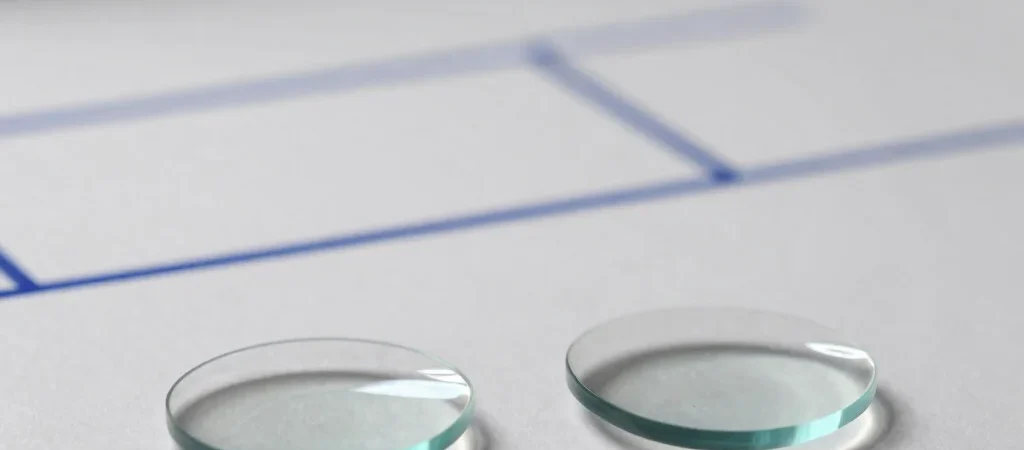
Lens index is easy to mistake for a simple quality score. It is not: the term describes how strongly a lens material bends light, and higher-index materials can produce thinner lenses for the same prescription. Whether that difference matters in a finished pair depends on more than the number.
What The Index Describes
A lens material’s refractive index indicates how much it bends light. In broad terms, a higher-index lens can achieve a given optical correction with less material thickness than a lower-index lens. That does not mean every wearer will notice a dramatic change, because prescription strength, lens shape, and frame choice also affect the finished lens.
Frame Size Changes The Result
A large lens can extend farther from its center, which may make edge thickness more visible in some prescriptions. A smaller frame, or one whose shape keeps the optical center well positioned, can sometimes help manage thickness without changing index. Frame fit and lens choice are best considered together rather than as separate decisions.
Compare The Full Lens
Index is only one part of a lens specification. Lens design, material properties, and any selected treatments can also affect the finished result and how it suits the wearer. Ask what trade-offs apply to your prescription and chosen frame instead of assuming that the highest available index is automatically the best option.
Ask About Your Prescription
General explanations can help you prepare questions, but they cannot determine which lens is suitable for an individual prescription. An eye-care professional or qualified optical professional can explain the options in context, including how frame dimensions may influence the final thickness. Treat index as a useful comparison point, not a verdict on lens quality.