
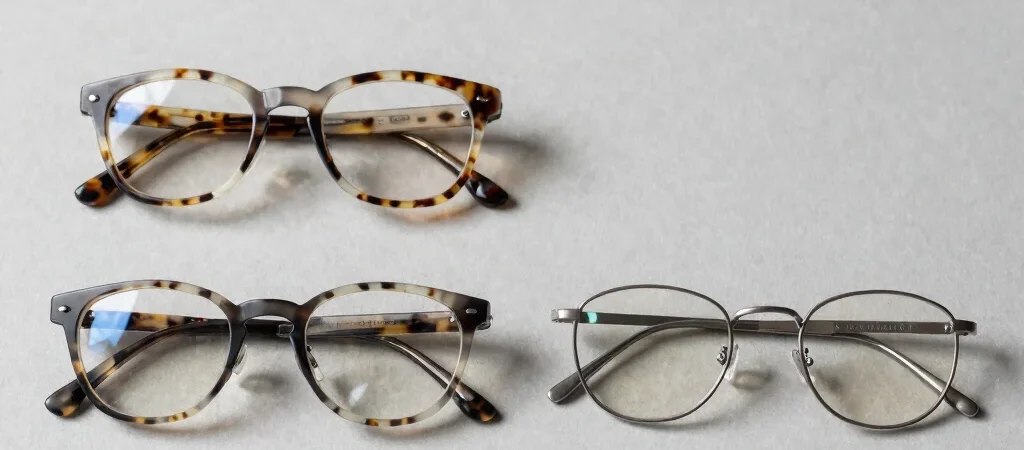
Set an acetate frame beside a metal one and the differences are immediate: one often has a broader, more visible rim, while the other can look finer and more open around the lenses. But material alone does not determine comfort or durability. Shape, construction, fit, and care all matter.
Acetate Makes Color Visible
Many acetate frames are made from layered sheets that are cut and shaped, which allows color and pattern to run through the material rather than sit only on its surface. The resulting rims can feel substantial and give a frame a strong visual outline. That presence may suit someone who wants the frames to be a clear part of their look, though the finished weight depends on the frame’s design.
Metal Keeps The Outline Fine
Metal frames often use slim rims and small components such as nose pads, creating a lighter-looking outline. Their fit can depend on how the bridge and pads rest, so a delicate appearance is no guarantee that the frame will feel comfortable. Check for pressure at the nose and behind the ears, especially if you plan to wear the glasses for long periods.
Construction Matters Too
Hinges, joints, rim thickness, and the way the temples are finished all contribute to how a frame wears. Different materials and designs may respond differently to adjustment, so it is sensible to ask a qualified optical professional what can be adjusted on a particular frame. No material is automatically the durable choice: everyday handling and appropriate care make a difference.
Choose By Feel And Use
Try to compare the actual fit rather than choosing by a material label. Notice whether the frame feels balanced, whether it stays in place, and whether its finish suits your routine. The best choice is the one whose construction and feel work for you—not the one with the more impressive-sounding material.